Trusted Water Damage Restoration in Evansville, IN – From Assessment to Full Repair
Evansville Water Damage Restoration provides certified water damage restoration in Evansville, IN, for homeowners and businesses facing floods, pipe bursts, sewage backups, and storm damage. Our IICRC-certified technicians respond to emergencies across Vanderburgh County within 60 minutes, 24 hours a day, 7 days a week. We handle every phase of restoration — from initial water extraction to structural drying, mold prevention, and final repairs.
Evansville’s location along the Ohio River, combined with Indiana’s humid subtropical climate, creates elevated water damage risks throughout the year. Spring and summer bring riverine flooding to low-lying neighborhoods like the East Side and areas near Pigeon Creek. Winter temperatures regularly drop below freezing, causing burst pipes in the city’s many pre-1950s homes with aging plumbing. These local conditions require restoration professionals who understand Vanderburgh County building codes and Indiana DNR flood zone compliance.
Don’t wait for water damage to cause mold growth or structural deterioration. Mold can begin forming within 48 hours in Evansville’s humidity. Call Evansville Water Damage Restoration at (812) 445-6608 for emergency water damage restoration Evansville residents trust for fast, documented, insurance-approved results.
📞 Get Help Now — (812) 445-6608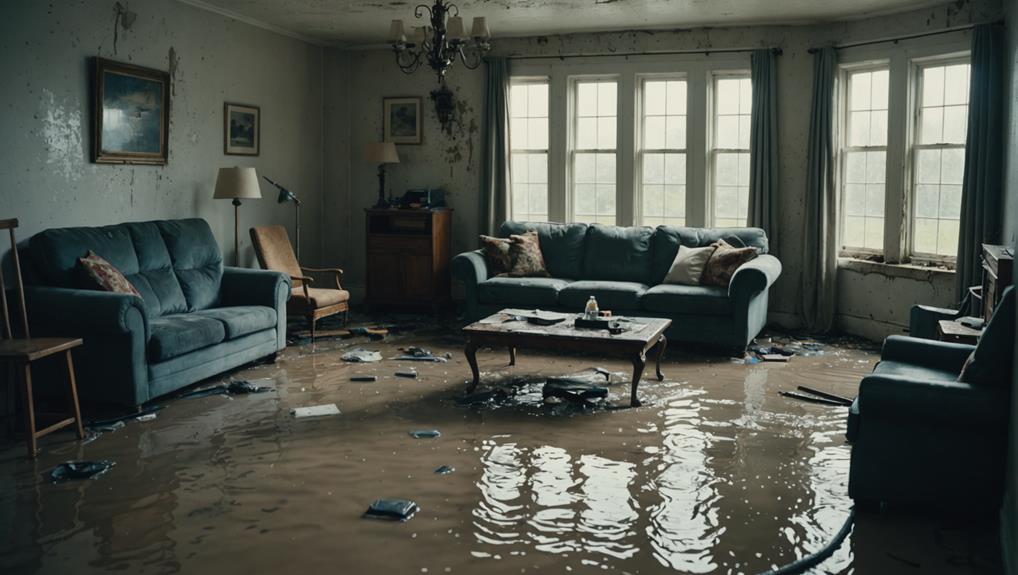
Water Damage Restoration Service Specifications
Every Evansville water damage restoration project includes detailed documentation with moisture readings, equipment logs, photo evidence, and drying reports — all formatted for insurance submission.
- Response Time:
- Under 60 minutes to any Evansville address, 24/7/365. Covers all Vanderburgh County locations within a 30-mile radius of downtown Evansville.
- Service Area:
- All Evansville zip codes: 47710, 47711, 47712, 47713, 47714, 47715, 47720, plus Newburgh, Boonville, Henderson (KY), and surrounding Vanderburgh, Warrick, and Posey County communities.
- Certifications:
- IICRC Water Restoration Technician (WRT), IICRC Applied Microbial Remediation Technician (AMRT), Indiana contractor license, Restoration Industry Association (RIA) member.
- Equipment & Technology:
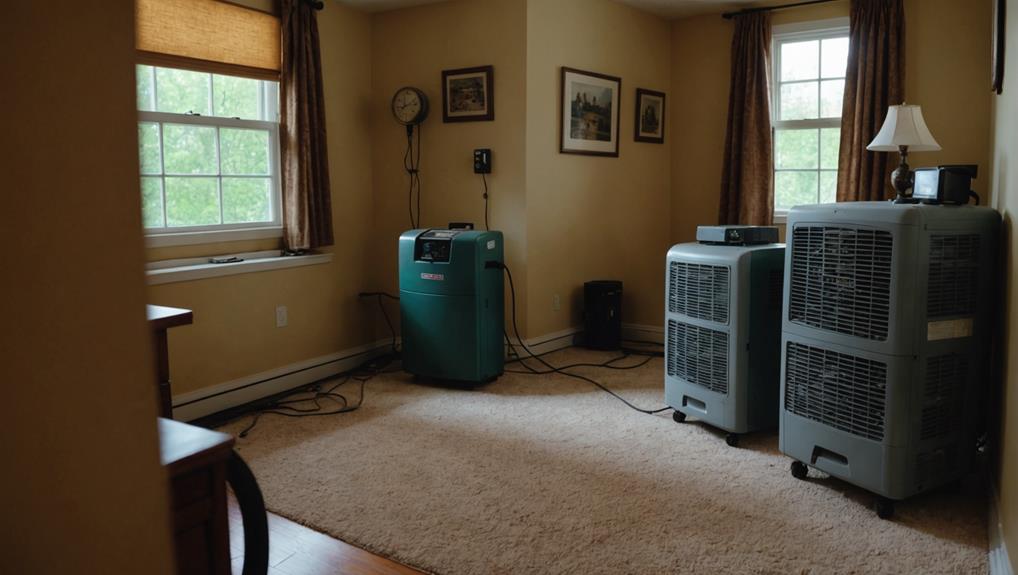
- Truck-mounted extractors (200 GPM capacity), LGR dehumidifiers (130 PPD per unit), axial air movers (500+ CFM), infrared thermal imaging cameras, pin and pinless moisture meters, hydroxyl generators for odor removal.
- Pricing:
- Water extraction starts at approximately $3.50/sq ft. Typical Evansville residential projects range from $1,500 to $5,000 depending on water category, affected area, and materials involved. Free on-site estimates provided.
- Insurance:
- Direct billing to all major carriers including State Farm, Allstate, Erie, and Indiana Farmers Mutual. 95% insurance approval rate on documented claims. We coordinate directly with your adjuster.
- Guarantee:
- 1-year written workmanship warranty on all labor and materials. Includes post-restoration moisture verification and a 30-day follow-up inspection at no charge.
Common Causes of Water Damage in Evansville Homes & Businesses
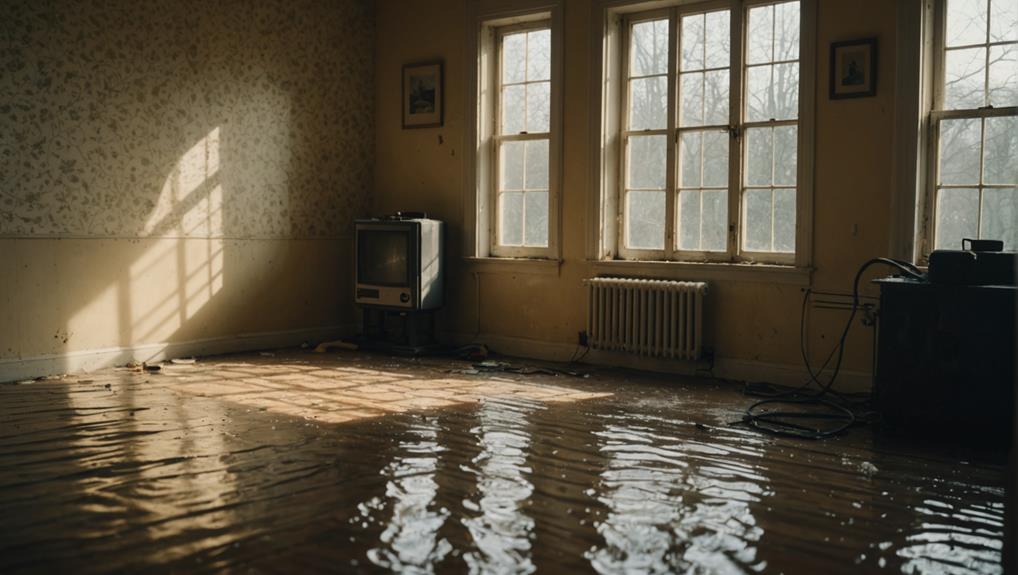
Evansville’s geography along the Ohio River and its inventory of older homes create specific water damage risks not found in every Indiana city. Understanding these local risk factors helps property owners respond faster.
Ohio River & Pigeon Creek Flooding
Evansville’s East Side and neighborhoods near Pigeon Creek face seasonal flooding when the Ohio River rises, particularly from March through June. Basements in low-lying areas along Riverside Drive and near Angel Mounds regularly take on floodwater classified as Category 3 (black water), which requires professional extraction and antimicrobial treatment. The 2024 Ohio River crest reached over 40 feet at the Evansville gauge, flooding dozens of properties.
Burst Pipes in Pre-1950s Homes
Over 40% of Evansville’s housing stock was built before 1960, with many homes in the West Side, Jacobsville, and Downtown featuring original galvanized or cast-iron plumbing. When winter temperatures drop below 20°F, these aging pipes are prone to freezing and bursting. A single burst pipe can release 400+ gallons of water per hour into walls and subfloors.
Storm & Sewer Backup Damage
Evansville averages 45 inches of rainfall annually, and summer thunderstorms frequently overwhelm older storm drains in neighborhoods like North Side and Tepeote. Sewer backups push Category 2 or 3 water into basements and crawl spaces. These events require immediate professional extraction to prevent bacterial contamination and structural damage.
Appliance Failures & Supply Line Leaks
Water heater failures, washing machine hose ruptures, and dishwasher supply line leaks account for a significant portion of residential water damage claims in Evansville. Ranch-style suburban homes across the 47714 and 47715 zip codes often have water heaters in finished basements, where a tank failure can saturate carpet, drywall, and stored belongings within hours.
Our 7-Step Water Damage Restoration Process
Our Evansville water damage restoration process follows IICRC S500 standards and is designed for full documentation at every stage, giving you and your insurance adjuster a clear record of the work performed.
-
Step 1: Emergency Contact & Dispatch
Call (812) 445-6608 any time, day or night. Our dispatcher gathers details about the water source and affected areas, then routes the nearest available crew to your Evansville address. Target arrival is under 60 minutes for all Vanderburgh County locations.
-
Step 2: On-Site Assessment & Moisture Mapping
Technicians use infrared thermal imaging cameras and pin moisture meters to map every affected surface. We classify the water category (1, 2, or 3) and damage class (I through IV) per IICRC standards. This assessment determines the equipment plan and provides baseline readings for your insurance documentation.
-
Step 3: Water Extraction
Truck-mounted extractors remove standing water at rates up to 200 gallons per minute. Portable submersible pumps handle deep basement flooding common in Evansville’s river-adjacent neighborhoods. Weighted extraction tools pull water from carpet, pad, and subfloor layers to reduce total drying time.
-
Step 4: Structural Drying & Dehumidification
We deploy LGR dehumidifiers rated at 130 pints per day alongside high-velocity air movers producing 500+ CFM each. Equipment placement follows psychrometric calculations specific to the affected area. Typical Evansville homes reach target dryness within 3 to 5 days, with daily moisture readings documented.
-
Step 5: Antimicrobial Treatment & Mold Prevention
All affected surfaces receive EPA-registered antimicrobial treatment to prevent mold colonization. In Evansville’s humid climate, mold can begin growing within 48 hours of water exposure. Category 3 water events require additional disinfection of all contacted materials per IICRC S520 guidelines.
-
Step 6: Content & Material Removal
Unsalvageable materials — including saturated drywall, carpet padding, and insulation — are documented, photographed, and removed for proper disposal. Vanderburgh County requires permits for structural repairs exceeding defined thresholds, and we handle all permit applications on your behalf.
-
Step 7: Reconstruction & Final Verification
We rebuild removed drywall, flooring, trim, and cabinetry to match your home’s original condition. A final moisture verification confirms all materials are at or below acceptable levels. You receive a complete project binder with before/after photos, moisture logs, and equipment records for your insurance file.
Timeline & Costs for Evansville Water Damage Restoration Projects
Water damage restoration costs in Evansville, IN, vary based on the water category, area affected, materials involved, and extent of reconstruction needed. Below are typical ranges for common project types.
| Project Type | Common Cause | Typical Area | Cost Range | Timeline |
|---|---|---|---|---|
| Category 1 – Clean Water | Broken supply line or faucet leak | 100–300 sq ft | $1,500–$2,500 | 2–3 days |
| Category 2 – Gray Water | Washing machine overflow or sump pump failure | 200–500 sq ft | $2,500–$4,000 | 3–4 days |
| Category 3 – Black Water | Sewer backup or Ohio River flooding | 300–800 sq ft | $3,500–$6,000+ | 4–7 days |
| Basement Flood (Full) | River crest, heavy rain, or foundation breach | 500–1,200 sq ft | $4,000–$8,000+ | 5–10 days |
All figures are estimates based on typical Evansville residential projects and may vary depending on site conditions, material choices, and insurance coverage. Evansville Water Damage Restoration provides free on-site assessments with written estimates before any work begins.
Why Choose Evansville Water Damage Restoration
Evansville Water Damage Restoration serves Vanderburgh County with IICRC-certified technicians who understand the specific water damage risks created by the Ohio River, Evansville’s aging housing stock, and Indiana’s humid subtropical climate. We provide documented, insurance-ready restoration from first call through final repair.
Under 60-Minute Local Response
Our crews are stationed in Evansville, not dispatched from Indianapolis or Louisville. This means arrival times under 60 minutes to any address within Vanderburgh County, including East Side, West Side, Downtown, North Side, and Tepeote neighborhoods.
IICRC WRT & AMRT Certified
Every technician holds current IICRC Water Restoration Technician (WRT) certification. For mold-related events, our AMRT-certified specialists follow S520 protocols. These credentials are verified and required by most Indiana insurance carriers for claim approval.
Full Insurance Claim Documentation
We photograph and log every phase of restoration with timestamped moisture readings, equipment inventories, and material lists. Our documentation format meets requirements for State Farm, Allstate, Erie, and other major carriers active in Indiana. We bill your insurer directly.
1-Year Written Workmanship Warranty
All labor and materials are covered by a 1-year written warranty. This includes a 30-day post-completion inspection where we re-verify moisture levels and check for any signs of mold. If any issue arises from our work within 12 months, we return at no cost.
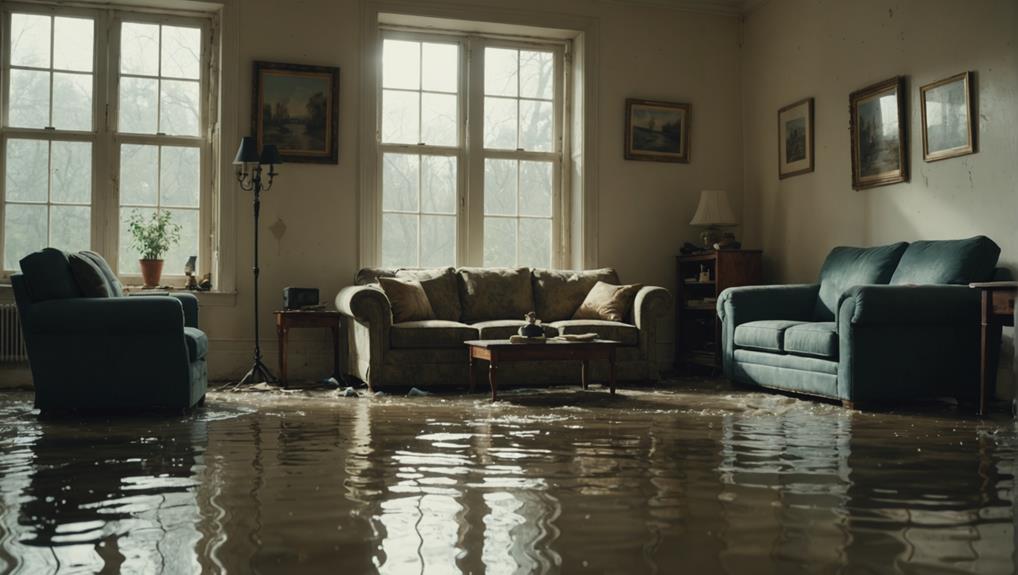
DIY vs. Professional Water Damage Restoration in Evansville
| Factor | DIY Approach | Professional Restoration |
|---|---|---|
| Water Extraction Speed | ✗ Shop vac removes surface water only; subfloor and wall cavities remain saturated | ✓ Truck-mounted extractors remove up to 200 GPM from all layers including carpet pad, subfloor, and wall cavities |
| Drying Effectiveness | ✗ Box fans and household dehumidifiers cannot reach target moisture levels in Evansville’s humid climate | ✓ LGR dehumidifiers (130 PPD) and 500+ CFM air movers achieve documented target dryness within 3–5 days |
| Mold Prevention | ✗ Without antimicrobial treatment, mold can colonize within 48 hours in Indiana’s humidity | ✓ EPA-registered antimicrobial application on all affected surfaces with post-treatment verification |
| Hidden Damage Detection | ✗ No way to detect moisture behind walls or under flooring without specialized tools | ✓ Infrared thermal imaging and pin moisture meters map every affected area including hidden cavities |
| Insurance Claim Approval | ✗ Self-performed work often lacks documentation required by insurers; claims may be reduced or denied | ✓ Timestamped photos, moisture logs, and equipment records formatted for direct insurance submission |
| Health & Safety | ✗ Category 2 and 3 water contains bacteria, sewage, or chemicals requiring PPE and proper disposal | ✓ Technicians use OSHA-compliant PPE; contaminated materials are disposed per Vanderburgh County regulations |
What to Expect When You Call
When you call (812) 445-6608, our dispatcher collects key details about your situation and sends the nearest crew to your Evansville address within 60 minutes. On arrival, technicians assess the damage using moisture meters and thermal imaging, then walk you through the restoration plan and estimated timeline. You receive daily progress updates with moisture readings and photos throughout the drying process. After final verification, we deliver a complete project binder for your records and insurance file.
Common Water Damage Restoration Project in Evansville
📍 Typical Water Damage Restoration Project: East Side Basement Flood from Ohio River Overflow
- Typical Scenario:
- An Evansville homeowner on the East Side discovers 6 inches of standing water in their 500-square-foot basement after a spring Ohio River crest. The water entered through foundation cracks and is classified as Category 3, containing river sediment and potential contaminants. Carpet, drywall (lower 24 inches), and stored belongings are submerged.
- Our Approach:
- Our crew arrived within 45 minutes and extracted approximately 2,000 gallons of standing water using truck-mounted pumps and portable submersible units. We deployed 10 LGR dehumidifiers and 20 air movers in a calculated drying configuration, applied EPA-registered antimicrobial treatment to all contacted surfaces, and removed saturated drywall, carpet, and pad for disposal.
- Typical Outcome:
- The basement reached verified target dryness by Day 4. Full reconstruction of drywall, flooring, and trim was completed by Day 8. Total project cost fell within the $4,500–$6,500 range. The homeowner’s insurance covered 100% after deductible. A 30-day follow-up confirmed no mold growth, backed by our 1-year workmanship warranty.
Local Evansville Water Damage Risks & Prevention
Ohio River Corridor & Flood-Prone Neighborhoods
Properties along Riverside Drive, near Angel Mounds, and in low-lying East Side areas face the highest flood risk in Evansville. The Ohio River crests annually between March and June, and homes without proper foundation waterproofing or sump pump systems are vulnerable to basement flooding. Property owners in these areas should verify their flood insurance coverage and ensure sump pumps have battery backup systems.
Aging Plumbing in Historic Districts
The West Side, Jacobsville, and Downtown Evansville contain large concentrations of homes built before 1950 with original galvanized steel or cast-iron plumbing. These materials corrode from the inside out, leading to pinhole leaks in walls and sudden pipe failures during winter freezes. Annual plumbing inspections can identify weakened sections before they fail.
Vanderburgh County Building Code Compliance
Vanderburgh County requires building permits for structural repairs following water damage, including drywall replacement and electrical work in affected areas. Mold remediation projects exceeding 10 square feet must follow Indiana Department of Health guidelines. Evansville Water Damage Restoration handles all permit applications and ensures every project meets current code requirements.
Humidity & Mold Growth Prevention
Evansville’s humid subtropical climate produces average summer relative humidity above 70%. After any water intrusion event, mold can begin growing on damp surfaces within 48 hours. Maintaining indoor humidity below 50% with properly sized dehumidifiers is critical for prevention, especially in basements and crawl spaces.
Prevention Checklist for Evansville Property Owners
- Install a battery-backup sump pump if your home is in a flood-prone Evansville neighborhood near the Ohio River or Pigeon Creek
- Inspect washing machine hoses, water heater connections, and supply lines annually; replace rubber hoses with braided stainless steel
- Insulate exposed pipes in crawl spaces, attics, and exterior walls before Evansville’s winter temperatures drop below freezing
- Clear gutters and downspouts at least twice per year and extend downspout discharge 6+ feet from your foundation
- Verify your homeowner’s insurance covers water damage and check whether you need separate flood insurance for river-related events
- Maintain indoor humidity below 50% using a dehumidifier rated for your square footage, especially in below-grade spaces
- Know your water main shutoff valve location and test it annually so you can stop flow immediately during a pipe burst
- Schedule a plumbing inspection if your Evansville home has original pre-1960s galvanized or cast-iron pipes
Insurance Claims Help for Evansville Residents
Filing a water damage insurance claim in Indiana can be complicated, especially when adjusters require specific documentation formats and timelines. Evansville Water Damage Restoration works directly with all major insurance carriers serving Vanderburgh County — including State Farm, Allstate, Erie Insurance, and Indiana Farmers Mutual — to streamline your claim from first notice through final payment. We document every phase of restoration with timestamped photographs, daily moisture readings, itemized equipment logs, and material inventories that meet insurer requirements.
Indiana homeowners insurance typically covers sudden and accidental water damage such as burst pipes, appliance failures, and storm-related intrusion. However, flood damage from the Ohio River or rising groundwater requires a separate National Flood Insurance Program (NFIP) policy or private flood coverage. Our team reviews your policy details during the initial assessment and advises you on what is likely covered before work begins, so there are no surprises. We maintain a 95% insurance approval rate on properly documented claims.
Our 5-Step Insurance Claim Process
- We document all damage immediately upon arrival with timestamped photos, video, and written descriptions before any extraction begins
- Our team contacts your insurance carrier within 24 hours to file the initial claim notice and provide preliminary scope and category assessment
- We coordinate directly with your assigned adjuster, providing daily moisture logs, equipment inventories, and progress photos throughout the restoration
- Upon project completion, we submit a detailed final report with before/after documentation, line-item costs, and material specifications to your insurer
- We handle direct billing to your insurance company so you only pay your deductible — no out-of-pocket costs while waiting for reimbursement
Insurance Coverage Review
Not sure what your Indiana homeowner’s policy covers? We review your policy details during the initial assessment and explain what is typically covered versus what may require separate flood insurance. No charge for this consultation.
Direct Insurance Billing
We bill your insurance carrier directly on approved claims. You pay only your deductible at project start. Our documentation format is accepted by State Farm, Allstate, Erie, Indiana Farmers Mutual, and other carriers active in Vanderburgh County.
Certifications & Equipment We Use
Industry Certifications
All Evansville Water Damage Restoration technicians hold current IICRC Water Restoration Technician (WRT) certification, the industry standard required by most insurance carriers for claim approval. Our mold remediation specialists also carry IICRC Applied Microbial Remediation Technician (AMRT) certification, qualifying them to handle Category 3 water events and post-flood mold prevention per S520 standards. We are members of the Restoration Industry Association (RIA) and hold an active Indiana contractor license.
Restoration Standards We Follow
Every project follows IICRC S500 (Standard for Professional Water Damage Restoration) and IICRC S520 (Standard for Professional Mold Remediation) protocols. These standards define water damage categories, drying procedures, antimicrobial application, and documentation requirements. Following these protocols ensures consistent results and meets the documentation thresholds required by Indiana insurance carriers for claim approval.
Equipment Deployed on Every Project
- Truck-Mounted Water Extractors — High-capacity extraction units rated at 200 gallons per minute for rapid removal of standing water from flooded basements and commercial spaces
- LGR Dehumidifiers (Dri-Eaz LGR 3500i) — Low-grain refrigerant dehumidifiers removing up to 130 pints per day, effective in Evansville’s high-humidity conditions for achieving target dryness
- High-Velocity Air Movers — Axial and centrifugal air movers producing 500+ CFM to accelerate evaporation from carpet, walls, and structural materials during the drying phase
- Infrared Thermal Imaging Cameras — FLIR thermal cameras that detect moisture behind walls, under flooring, and in ceiling cavities without requiring demolition for hidden damage assessment
- Digital Moisture Meters — Pin-type and pinless moisture meters for daily readings on drywall, wood framing, and concrete, providing documented evidence of drying progress
- Hydroxyl Generators — Chemical-free odor elimination units safe for occupied spaces, used to remove musty and sewage odors after Category 2 and 3 water events
Why You Can Trust Evansville Water Damage Restoration
Active Indiana contractor license with general liability and workers’ compensation coverage for all Vanderburgh County projects
All technicians hold current IICRC Water Restoration Technician and Applied Microbial Remediation Technician certifications
Crews available around the clock, every day of the year. Call (812) 445-6608 for under-60-minute response anywhere in Evansville
Written warranty covering all labor and materials for 12 months, including a complimentary 30-day post-completion moisture inspection
Serving Evansville and Surrounding Communities
Evansville Water Damage Restoration provides under-60-minute emergency response to all Evansville neighborhoods and surrounding Vanderburgh, Warrick, and Posey County communities.
Zip codes served: 47708 • 47710 • 47711 • 47712 • 47713 • 47714 • 47715 • 47720 • 47725 • 47630 • 47601 and surrounding Vanderburgh County.
Frequently Asked Questions About Water Damage Restoration in Evansville, IN
How long does water damage restoration take in Evansville, IN?
Most Evansville residential water damage restoration projects take 3 to 5 days for drying, with full reconstruction completed within 7 to 10 days. Category 1 clean water events in smaller areas may dry in 2 to 3 days. Category 3 black water events, such as Ohio River flooding or sewer backups, can require 5 to 7 days for drying alone due to contamination protocols. We provide a specific timeline estimate during your initial on-site assessment.
What does water damage restoration cost in Evansville, IN?
Typical Evansville water damage restoration projects range from $1,500 to $5,000 for residential properties. Costs vary based on water category, square footage affected, and materials requiring replacement. Extraction averages approximately $3.50 per square foot, while full basement floods involving Category 3 water can reach $6,000 or more. We provide free written estimates before any work begins, and most projects are covered by homeowner’s insurance.
Does homeowner’s insurance cover water damage restoration in Indiana?
Indiana homeowner’s insurance policies typically cover sudden and accidental water damage, including burst pipes, appliance failures, and storm-driven intrusion. However, flood damage from the Ohio River or rising groundwater requires a separate NFIP or private flood insurance policy. Gradual damage from deferred maintenance, such as a slow leak, is usually excluded. We review your policy during assessment and coordinate directly with your insurer for covered claims.
Can I stay in my home during the water damage restoration process?
For most Category 1 (clean water) events affecting a limited area, you can remain in your home during restoration. However, Category 3 black water events — including sewage backups and Ohio River flooding — pose health risks that may require temporary relocation. The dehumidifiers and air movers operate 24 hours a day during drying, which produces noise. We advise each homeowner based on the specific water category and extent of damage.
How do I prevent mold after water damage in Evansville?
In Evansville’s humid climate, mold can begin colonizing damp materials within 48 hours of water exposure. Professional drying with LGR dehumidifiers and air movers is the most effective prevention method. After restoration, maintain indoor humidity below 50%, ensure proper ventilation in basements and crawl spaces, and monitor for musty odors. Our antimicrobial treatment during restoration creates a protective barrier on treated surfaces.
What is the difference between water extraction and structural drying?
Water extraction removes visible standing water using truck-mounted pumps and portable extractors. This process typically takes 2 to 6 hours depending on volume. Structural drying is the multi-day process that follows, using dehumidifiers and air movers to remove moisture absorbed into walls, subfloors, framing, and concrete. Both steps are required — extraction alone leaves enough trapped moisture for mold growth and structural damage.
Do you handle Ohio River flood damage in Evansville?
Yes. Ohio River flooding is one of the most common water damage events we handle in Evansville, particularly in East Side neighborhoods and areas near Pigeon Creek. River flooding is classified as Category 3 (black water), requiring full antimicrobial treatment, contaminated material removal, and extended drying protocols. We carry the IICRC AMRT certification specifically for these contamination events and handle all Vanderburgh County permit requirements.
Are you available 24/7 for emergency water damage in Evansville?
Yes. Evansville Water Damage Restoration dispatches crews 24 hours a day, 7 days a week, 365 days a year. Our response target is under 60 minutes to any address within Vanderburgh County. Call (812) 445-6608 for immediate emergency dispatch. Nighttime and weekend calls receive the same response priority and pricing as standard business hours.
What Vanderburgh County regulations apply to water damage restoration?
Vanderburgh County requires building permits for structural repairs following water damage, including drywall replacement, electrical work in affected areas, and plumbing modifications. Mold remediation projects exceeding 10 square feet must follow Indiana Department of Health guidelines. Properties in designated FEMA flood zones must comply with Indiana DNR floodplain regulations during reconstruction. We handle all permit applications and code compliance on your behalf.
How do I know if there is hidden water damage behind my walls?
Hidden water damage is common in Evansville homes, especially in older construction with plaster-and-lath walls. Warning signs include musty odors, bubbling or peeling paint, warped baseboards, and discoloration on walls or ceilings. Our technicians use infrared thermal imaging cameras that detect temperature differences caused by trapped moisture without requiring demolition. Pin moisture meters then confirm exact moisture levels in suspected areas. We recommend professional assessment after any water event, even if surfaces appear dry.
Service Guarantees
1-Year Workmanship Warranty
All labor and materials installed by Evansville Water Damage Restoration are covered by a written 1-year warranty. If any issue arises from our work within 12 months — including moisture recurrence or material failure — we return and correct it at no additional cost. Warranty documentation is provided at project completion.
30-Day Post-Completion Inspection
Every restoration project includes a complimentary follow-up inspection 30 days after completion. We re-check moisture levels in all previously affected areas and inspect for any signs of mold growth. This inspection is included at no charge and provides additional documentation for your records.
IICRC Standards Compliance
All work follows IICRC S500 and S520 protocols for water damage restoration and mold remediation. These nationally recognized standards define proper procedures for water classification, drying, antimicrobial treatment, and documentation. Compliance with these standards is required by most insurance carriers for claim approval in Indiana.
Documented Moisture Verification
We do not consider a project complete until moisture meter readings confirm all materials are at or below acceptable moisture content levels. Daily drying logs with timestamped readings are provided to you and your insurance company. Final verification readings are included in your project completion binder.
Get Fast, Professional Water Damage Restoration in Evansville Today
Water damage worsens every hour. Saturated materials begin growing mold within 48 hours in Evansville’s humidity. Call Evansville Water Damage Restoration at (812) 445-6608 now for 24/7 emergency response anywhere in Vanderburgh County — crews arrive in under 60 minutes.
📞 (812) 445-6608Call Now — Free Assessment